Grass Courts: The Elusive Classic
Imagine the emerald lawns of Wimbledon. Grass courts are the sport’s most romanticized setting—a nod to tradition and elegance. But what makes this surface such a rare bird?
Grass keeps players on their toes—literally. The ball here hardly leaps; it skids low, hugging the turf, demanding swift adjustment and lightning reactions. You blink, you lose. Footwork becomes a dance, often slippery and unpredictable. The match rhythm tends to be brisk, with points decided quickly—rallies rarely stretch out. You’ll see players serve and volley, launching forward after their serve, using slices to keep the ball even lower.
Grass is not for the faint of heart—or the shallow-pocketed groundskeeper. The upkeep is immense. A downpour can turn pristine turf into a sodden, unplayable mess in minutes, stalling play for a whole day. Maybe that’s why you’re more likely to find these courts on TV than at your local rec center—the grass-court stretch on tour lasts barely five weeks. If you ever do play, you’ll need specialized shoes. Expect the occasional “dead spot”—those odd, silent bounces that all but swallow the ball.
Clay Courts: The Sculptor’s Canvas
If grass is the fleeting beauty, clay is the unpredictable artist. Clay courts emerged as a solution to sun-burnt English lawns—protecting grass with a dusting of brick and rock. Over time, the surface became a crucible for ingenuity and patience.
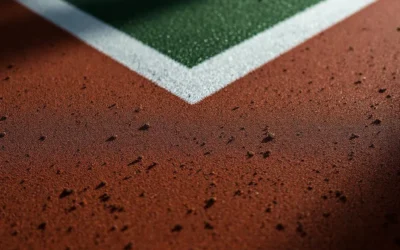
Clay slows everything down. It absorbs speed, causing the ball to bounce higher and float longer. Those high, loopy rallies? That’s clay doing its magic. Here, not only must you master spins and deft slices, you’ll need uncanny agility—thanks to the surface’s shifting dead patches and occasional odd bounces. Expect to see clever touch around the net and tricks with angles.
There’s red clay—think Roland Garros in Paris, where summer turns courts to burnt orange. Or green clay, more common in the U.S., created from crushed volcanic rock. Each variety gives the court its own character: red clay is gritty, green is a bit faster and firmer.
Play demands a particular kind of shoe, one that grips but lets you slide—a necessity for covering ground. On clay, embracing uncertainty is not just an option, it’s survival.
Hard Courts: The Pragmatist’s Playground
Hard courts are tennis’s great equalizer—reliable, colorful, everywhere. At country clubs, parks, grand stadiums—they’re the people’s surface. Even two of the sport’s Grand Slam tournaments are staged on hard courts (the Australian and US Opens).
The surface is usually an acrylic layer atop asphalt or concrete, rendering the bounce predictable and fair. You won’t find the lows of grass, nor the sky-high hops of clay. The tempo is brisk but not frantic. This is where aggressive baseline hitters thrive, taking balls early, dictating play.
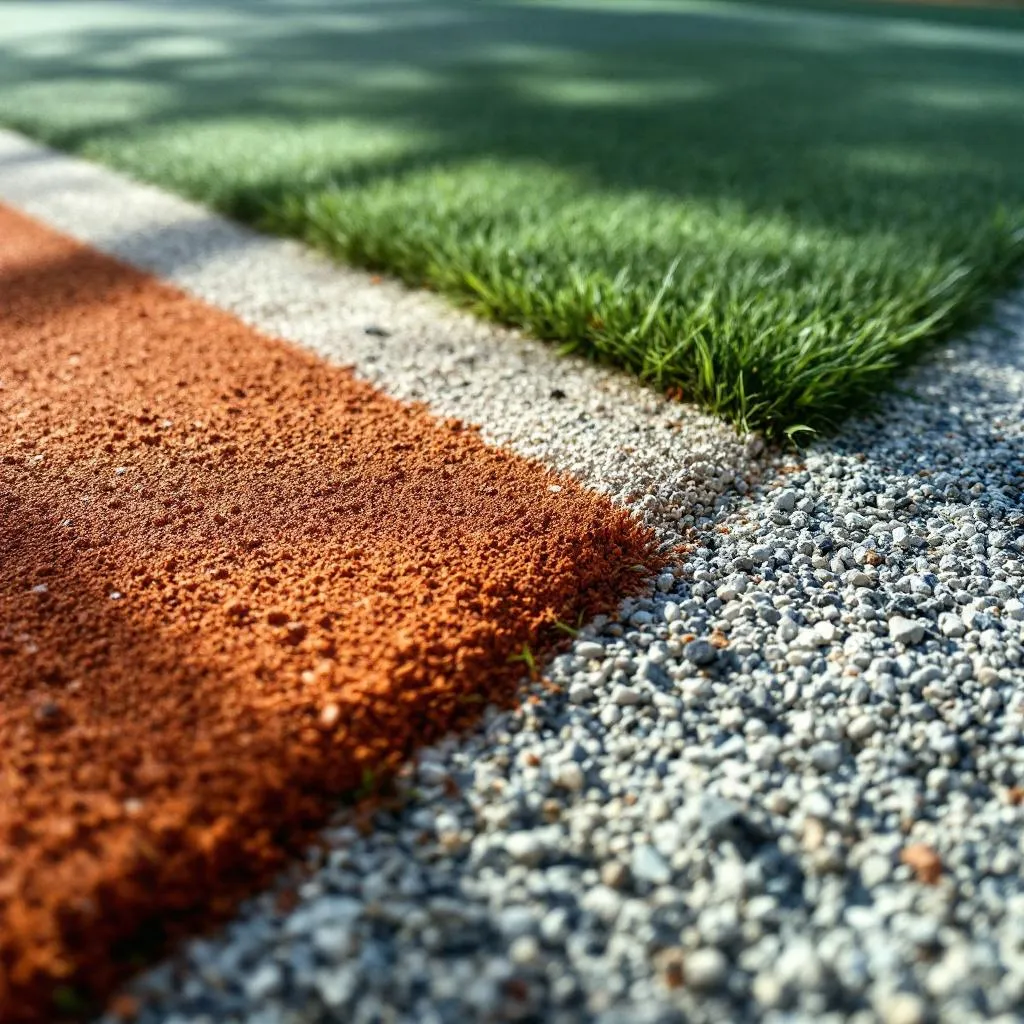
New hard courts are smooth and springy. Time, though, brings cracks or patches that can disrupt the rhythm. Maintenance is easier than with natural surfaces, which is why newcomers often start here—the consistent bounce is welcoming.
Asphalt courts—a hard court subset—are common at public facilities. Beneath a latex finish lies basic blacktop: rougher to play on, slower than true acrylic. Quality varies wildly, sometimes resembling a neglected roadway more than a tennis paradise. Watch your step; falls are unforgiving, and shoes wear thin fast.
Wood and Carpet: Echoes from the Past
Maybe you glimpse wooden floors in an aging gym—slick, polished relics where the ball rockets at blinding speed. Once, major events even took place on wood, but such days are gone. Now, wooden courts serve mostly as curiosities.
Carpet courts—no, not living room shag, but specialized surfaces of textile or synthetic fibers—enjoyed their heyday in postwar Europe and Asia. Lightning-fast, they played host to pros training for quick conditions, until injuries and time closed that chapter for the ATP Tour. Major events like the ATP Finals were once held on carpet; today, they’re museum pieces.
Why the Variety?
Most sports spell out the field down to the millimeter. Tennis, though, is different. The International Tennis Federation rule book details almost everything—nets, posts, scoring, even color contrast—but stays silent on surface. That opens a world of tactical and physical shifts.
Every major—every Grand Slam—stakes its identity on the ground the players cover: Australia’s hard, Paris’s red clay, Wimbledon’s grass, the U.S. Open’s acrylic. Grass serves are rockets; clay rewards patience and cunning; hard courts sit somewhere in-between.
Even legends have their favorites. Novak Djokovic, cool and clinical everywhere, admits clay’s tricky bounces test him most. Rafael Nadal? “King of Clay” is more than a nickname; thirteen Roland Garros titles prove his mastery.
Surface changes bounce, speed, and combat style. Balls soar on clay, skid on grass, and zip on acrylic. To watch tennis is to watch a sport shaped as much by earth, brick, grass or paint as by racket or resolve. And if you know the ground rules—literally—you see the real match unfold, step by step, on courts that never play the same way twice.