
Essential Tennis Strength and Conditioning: Unlocking Power, Agility, and Resilience
If you’ve ever spent an afternoon on the tennis court, sweat soaking through your shirt, legs buzzing with fatigue, you know—this sport doesn’t ask for half-measures. Tennis is demanding: every serve, sprint, and twist tests your power, balance, and stamina. Excelling isn’t just about precision or tactics. It’s about how your body moves, endures, rebounds. The heart of sustained progress? A focused strength and conditioning plan, carefully structured to sharpen all your athletic edges.
A Realistic Blueprint for Tennis Fitness
Forget generic gym routines. Top-level tennis preparation goes deeper. The goal isn’t just bigger biceps. It’s about crafting a body tuned for forceful serves, fast recovery, fluid pivots, and endless rallies. This means functional movement—the ability to generate strength and speed in every direction, precisely when you need it. Strong legs and shoulders matter, yes, but so do a rock-steady core, fast-reacting joints, and muscular symmetry that keeps injuries at bay.
Smart training weaves together all these threads. Build strength in both single- and double-legged stances. Develop rotational power. Train your body to absorb impact as fiercely as it delivers it. The real champions? They’re not just fit; they’re agile, robust, and ready for the unpredictable.
Periodized Training: Phases That Define Your Year
What sets pros apart from weekend warriors? Structure. Tennis offers no long off-season, so classic “bulking and cutting” cycles won’t cut it. Instead, the year is carved into distinct phases, each one layering onto the last, shaping you into both a powerhouse and an endurance machine.
Off-Season: Lay the Bricks
Here, the foundation is laid. The frenetic pace of the match falls away. In its place: focused, heavy lifts and broad movement drills that awaken slumbering muscles. Emphasis lands on basic strength, muscular growth, and ironing out flaws in your fitness. Skimping on this stage is like skipping the base of a pyramid—it all crumbles later.
Early Pre-Season: Forge the Base Strength
Once the basics are in place, it’s time to push. In this “hypertrophy” window, you pile on muscle and test your limits. It’s about moving heavy loads with intent and ramping up functional power. The edge you gain here sets the stage for those explosive moments on court—the first step to every ball, the drive behind every shot.
Late Pre-Season: Power, Speed, and Endurance
The competitive calendar looms. Now, every move and drill becomes tennis-specific. Traditional strength work shifts to faster, lighter, more explosive routines. Think: circuits, plyometrics, integrated speed and power sets. Between volleys and sprints in training, you’re recreating real match demands. Sessions are laser-focused—quality, not just quantity, reigns.
Core Exercises for the Complete Tennis Athlete
What should actually fill your routine? The right mix disciplines your entire body, aligning strength with the sport’s unique rhythms. Here’s a snapshot of moves worth your attention:
* Medicine ball slams: Behind each serve and groundstroke lies a chain reaction starting from your core. These slams teach your torso to unleash power—and to reign it back in when it matters most. Start light, perfect the action, then graduate to heavier spheres. Every rep simulates the stress of real play.
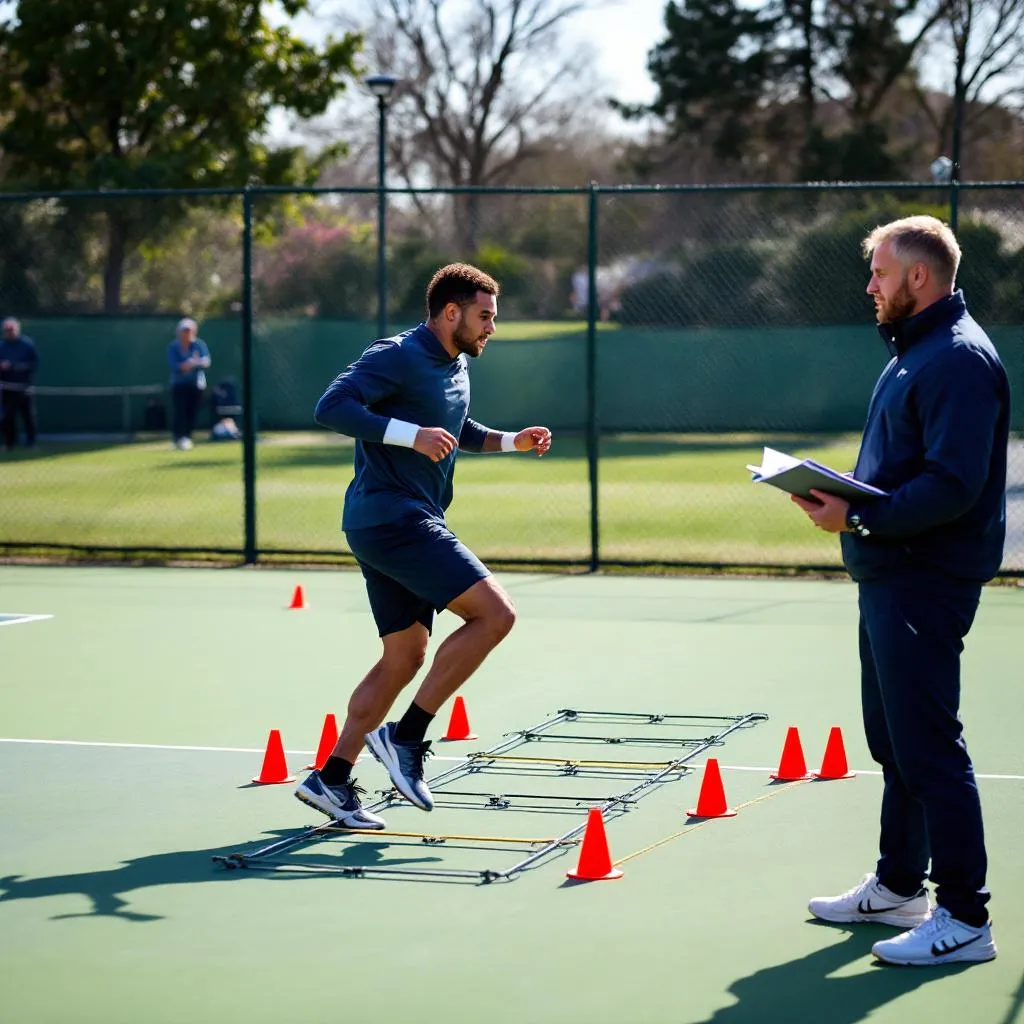
* Lunges with rotation: Tennis courts pull your legs in every direction. Add a twist, quite literally, to train both lateral stability and the rotational strength fueling those sweeping forehands. Keep your core steady and hips mobile.
* Push-ups and pull-ups: These are the bread and butter for any athlete. They carve out upper body strength, secure shoulder joints, and prepare you for both the violence of a serve and the subtlety of volley control. Each rep builds resilience against nagging overuse injuries.
* Goblet squats: Lower body dominance starts here. Cradling a weight, dropping deep, and exploding up trains hips, thighs, and glutes—all essential for that sudden burst to the net. Plus, they encourage clean movement patterns and posture.
Don’t Neglect Plyometrics: Training for Flight and Fast Feet
Jump training isn’t just for basketball. Tennis hinges on quick reactions, airborne moments, and lightning recoveries. Plyometric work—like box jumps and jump squats—primes your nerves and muscles for these demands. Box jumps build springtime power in your legs, letting you spring higher and land softer. Jump squats blend raw strength with flexibility, giving you that hair-trigger first step and rapid directional changes.
For the upper half, medicine ball throws echo the ballistic, rotational demands of a match—think serving, or uncorking winners from behind the baseline. Focus on fluid, high-velocity releases, always mirroring real tennis motions.
The Core: Your Rotational Engine
Ask any seasoned player what holds their game together—they’ll mention their core long before they mention their arms. Every shot, every stretch, fires from here. Exercises like planks with rotation, high-to-low cable chops, or Turkish get-ups are worth their weight in match points. Stability isn’t just a bonus; it’s protection and power entwined.
Take It to the Court
A true tennis conditioning routine isn’t about mindless reps. It’s a sculpted, evolving program tailored to the game’s brutal reality—fast changes, long grinds, sudden demands for power and fine control. With conscious, periodized training and specific, functional exercises, you can transform not just your physique but your entire style of play. Prepare the body, and the confidence begins to show; what once left you gasping at the baseline now simply feels like the next ball in the rally.
Ready to raise your game? Let the training begin. The court—and every muscle you’ve built—awaits.