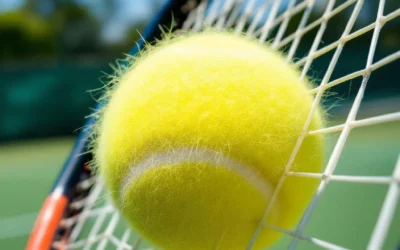
Mastering the Backhand Volley in Tennis: A Five-Step Blueprint
The backhand volley is a subtle but decisive weapon—part reflex, part control. Some players dread it, others seem to absorb its logic the way they’d breathe. But here, there are no secrets, just a clear path: five purposeful steps toward turning your net play from anxious lunges into assured, point-winning interventions.
Step One: Setting Your Stance for War
It starts before the ball is even near you. Feet whisper across the baseline, but at the net, you need roots and readiness—a stance that says you belong. Keep your weight balanced, knees flexed, not rigid. Your feet, if they could talk, would say they’re ready for anything: a lean to the left, a sudden push right. Racquet held in front, angled just enough for options—this pose is your armor.
Don’t freeze. The backhand volley is not a pose but a springboard. Stay on your toes, alive to the ball’s coming. That expectation—that split-second vigilance—often marks the line between a clumsy misstep and the crisp snap of a winning volley.
Step Two: Racquet Preparation—The Quiet Shift
Preparation is silent and swift. As the opponent’s shot drifts to your backhand side, your hands move almost autonomously. The racquet head glides up and back—not an exaggerated backswing, but just enough that the strings are waiting, poised like a fox in tall grass.
Grip is a detail many overlook, but it matters: the continental grip gives you the balance between firmness and touch. There’s elegance here—a sort of economy. Your body twists, left shoulder rotating slightly open, weight shifting just enough onto the back foot. You’re not swinging for power; you’re building the scaffolding for control.
Step Three: The Chase—Getting in Position
Now comes the footwork—crucial, but so often untidy in the hands of the nervous. Sidestep with urgency, not panic. The best players seem to slide into position, gliding as if the court tilts gently in their favor. Lead with your non-dominant foot, carve a path so that the ball falls right into your web.
Be ruthless about positioning—half a step too far or too near and the shot loses its meaning. Every muscle is tuned; every nerve alert. Even if your posture is textbook, if your feet won’t obey, the rest won’t save you.

Step Four: The Compact Strike
This is the heart of it—the meeting of strings and ball. Forget big, looping swings. The volley lives in brevity. Push, don’t punch. The racquet moves forward, guided more by your shoulder than your wrist. Wrists remain controlled, the racquet face slightly open like a hand ready to cradle an egg.
The ball arrives. You meet it, not with brute force, but with a gentle firmness. Absorb and redirect—like catching a snowball and immediately sending it back. The sound is a muted pop, not a loud smack. Watch your strings; see how they greet the ball, then let it go again, angled downward for control and depth.
Step Five: Finish and Recover—No Time to Blink
Many squander their hard work here, watching the shot instead of living the next one. Your follow-through is minimalist—a gesture, not a sweep. Your body leans naturally into the direction of the volley, weight traveling into the shot.
But as soon as contact is made, eyes dart forward, ready for the reply. Slide back into the ready stance, racquet lifted and centered. Anticipate. There’s a quiet courage in this, the way top players never look satisfied with just one good volley—they treat it as a moving part of a larger dance.
Final Thoughts: Playing with Instinct, Not Instability
The backhand volley isn’t meant for showmanship. It’s a test of patience, nerve, and split-second clarity. Practice each piece—stance, racquet prep, movement, the short stroke, the unhesitating recovery—until they become an instinct as natural as exhaling.
Nerves will flutter, especially at net while the point blazes. Let them. Trust that you have these five steps not as a rigid script, but as a toolbox—one you can reach for, tweak, and ultimately make your own. In the end, the best volleys are lived, not rehearsed.