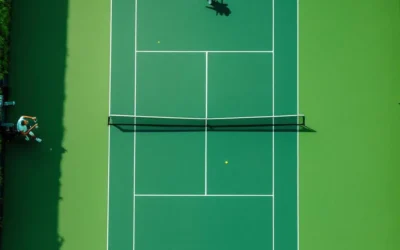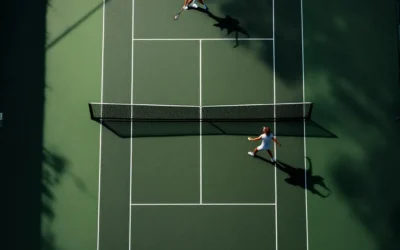
If you want to become a real doubles player—one who unsettles rivals and wins more matches—strategy isn’t optional, it’s fundamental. Success begins the moment you and your partner settle on an overarching plan that suits your combined strengths. Still, true doubles is fluid; you’ll need to shift tactics in flight, gauging and recalibrating according to the players facing you.
Picture this: maybe you’re innately aggressive, eager to serve and crash the net for an early volley. Then you stand opposite a pair raining down returns just above your shoelaces—there’s not much margin for error when the ball barely squeaks over the net. Here, wisdom is restraint. Hold back for a heartbeat after the serve, then sweep forward. Adaptability wins rallies, not stubbornness.
Let’s jump into some time-honored doubles strategies—tools to mix and match as the match evolves.
1. Command the Net
Most elite doubles teams—think the Bryan brothers—make their living a pace or two from the net cord. Get there and stay there; control follows. When your team corners the net, pressure piles onto your opponents. They’re forced to go for audacious angles, risking feeble pop-ups or outright misses. The secret? Net proximity grants you wider targets and easier downward smashes. You become the hunter, not the prey.
2. Move Laterally—Always
At the net, static feet are liabilities. Side-to-side movement as your opponent prepares to swing is more than a distraction; it injects uncertainty. Shooters hate a moving target, and the instinct is to steer clear of the prowling net person, often resulting in wild changes of direction and rushed shots. Even a feint—a convincing lunge toward poaching—may net you an easy put-away as your adversary cracks under perceived threat.
3. Pin Balls to Their Feet
There’s nothing comfortable about volleying around the ankles. Deliver groundstrokes with heavy topspin or low, skidding volleys to the feet of the opposing net player. Most likely, they’ll be forced to dig up the ball awkwardly, sending up a sitter for your side or missing altogether. That’s your cue to pounce: partners who anticipate this will move and finish the point decisively.
4. Drive Deep—Push Back
When stuck at the baseline, make depth your friend. Punching balls deep to your opponents’ side will push them back, buying you space to charge the net for the next exchange. More often than not, forced back-pedaling produces a soft reply, ripe for you or your partner to attack.
5. Exploit the Middle
It’s a simple mantra—’down the middle solves the riddle.’ Drilling balls into the court’s center can short-circuit the other team’s coordination. Who takes it, who leaves it? Good teams communicate loudly, but even pros get tangled in confusion or hesitate a precious split-second. Targeting the middle also steals angles from the response, shrinking passing lanes and inviting mistakes.
6. Target Backhand Volleys
Few doubles players boast a bulletproof backhand volley. If you can single out your weaker rival—often their backhand volley is the chink—repeatedly aim sharp or low shots there. This ups the odds of a mishit or a feeble return, setting up easy finishes for you and your partner.
Mastering Position and Formation
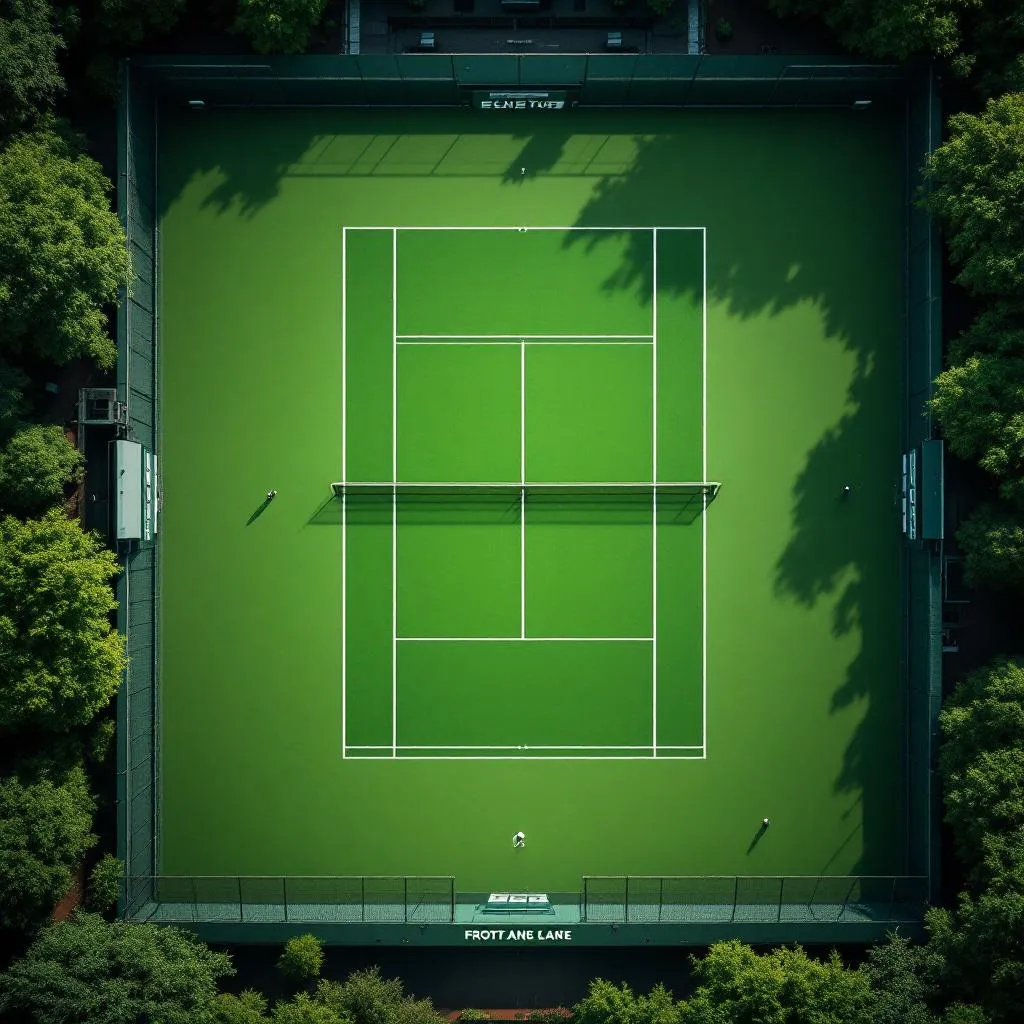
Many club players overlook the subtle art of positioning. Too often, they huddle by the alleys or loaf far from the net, unaware they’re inviting disaster. Golden rule: align yourself halfway between the center line and the outer doubles alley. Edging too far out simply offers the other team swathes of inviting court. At the net, stand close enough to intercept full-bodied volleys, not desperately scraping at half-volleys by your toes.
Movement is essential. As your partner serves or hits from the back, be ready a little behind the service line. As the exchange unfolds, edge forward so you’re primed to pounce if the ball zips in your direction—unless your partner tosses the opponents an overhead, in which case, duck and cover.
Serve and returners should stay just inside the doubles alley but still shade toward the center to seal up the middle. Observe advanced formations as well, like the “I” (server and net partner aligned down the center, springing off in agreed directions after the serve), or the “Australian” (both server and net player stack on one side, daring the returner to risk a tricky down-the-line pass). Each formation compresses space for your opponents in different ways, but leaves you vulnerable in others—toolkit options, not must-use chapters.
Formulating Serve and Return Schemes
On serve, engineer chances for your net partner to get involved. Most players flinch on backhand returns—so hits up the T on the deuce side, or swinging wide on the ad side, often reap soft returns. Don’t chase aces; instead, serve to discomfort and allow your ally to shine.
Pay attention game by game: Which returns are played with real intent? Which seem forced or shaky? Are your adversaries more tuned in to heat or spin? File those answers away and adjust your targeting accordingly.
On return, nothing demoralizes a rival like constantly putting balls back in play. Chasing line winners is a rookie mistake—a steady diet of deep, central returns is both safer and more effective. Aim for the lowest part of the net: more margin for error, fewer angles for the opposing net player, especially if they’re actively poaching.
Net Play—The Trifecta: Poach, Fake, Pinch
At the net, play only begins with positioning. You can poach (cutting off balls to surprise the returner), fake (bluffing a move, only to snap back and protect your alley), or pinch (closing the middle as your partner’s shot limits the opponents’ angles). Early poaching works well—most don’t try theatrical down-the-line returns from the jump. As patterns emerge, adjust: use fakes to linger in your opponents’ mind, pinch the center when you sense the reply will come there.
The beauty—and challenge—of doubles lies in this endless dance: move, read, disrupt, adapt. When communicated and executed with conviction, the strategies above don’t just win games; they forge true partnerships and frustration in any opponent’s eyes. Ultimately, it’s not about mechanical mastery but about turning a patch of hard court into a chessboard. And in that game, cleverness nearly always trumps brute force.