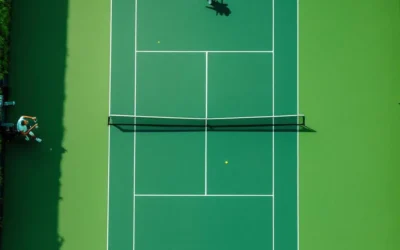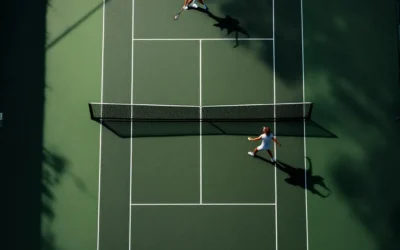
There’s something almost audacious about the serve and volley. In an era where players mostly cling to the baseline, trading groundstrokes like boxers exchanging jabs, the choice to rush the net after a serve feels refreshingly bold—almost rebellious. Yet the numbers don’t lie: this classic strategy, all but eclipsed beneath the floodlights of modern tennis, remains quietly lethal when executed with precision.
The principle is simple. The player delivers a forceful serve, then charges forward, eager to cut off the opponent’s reply at the net. While this approach once dominated the grass courts of Wimbledon—think Sampras, Edberg, Navratilova—it’s become a rarity, replaced by relentless baseline bombardment. But if you look closer, you’ll notice: the serve and volley still catches rivals by surprise, turning matches on their head.
Why does this strategy still work? Partly because most opponents don’t expect it. Decades of baseline play have conditioned players to rally patiently from behind the service line, setting up for long, punishing exchanges. When someone suddenly storms the net, it throws off rhythm and perspective. The server, now looming only a few feet away, compresses time and space. Returners are rushed, forced to improvise under pressure. Often, even a deep reply becomes a gift—the volleyer, well-positioned and alert, can pick their spot and finish the point with a crisp putaway.
There’s a deeper layer, too. By coming forward, you force your opponent into a series of split-second decisions. Should they attempt a passing shot down the line? Risk a lob? Go crosscourt and hope for an angle? Each choice carries risk. A well-placed volley converts the confusion into a point. The serve and volley isn’t just a physical act; it’s psychological warfare, a chess move disguised as a burst of athleticism.

When should you use this tactic? Timing matters. Fast surfaces—fresh grass, slick indoor hard courts—amplify its effectiveness. A biting, well-placed serve sets up the perfect opportunity, drawing a weak return and presenting the volleyer with options. Even on slower courts, a surprise foray to the net, especially at pivotal moments in a set, can disrupt an opponent’s comfort zone. It needn’t be every point. Sometimes, the mere threat of a net rush makes an opponent doubt themselves, gifting you free errors or opening up space for future attacks.
Of course, serve and volley demands courage. It’s a subtle blend of confidence and calculation. The serve must be substantial, not necessarily an ace, but aggressive enough to limit your rival’s choices. The approach—those explosive first steps—needs to be decisive. Hesitation is an invitation for disaster. And, standing at the net, you’re exposed; passing shots whiz by, the temptation to guess wrong forever present. But the rewards are real, and the exhilaration after a perfect volley is unmatched.
If you’re serious about weaving this tactic into your game, the transformation starts on the practice court. Sharpen that first serve. Practice split-stepping as you move forward. Drill your volleys—low, high, forehand, backhand—so reflex takes over in real play. Study your rivals: are they slow to react? Do they favour looping returns or risky passes? Adapt accordingly. And most importantly, commit to the strategy during a match. Dip your toe, and you drown. Go all-in, and you’ll feel the surge of adrenaline that comes with dictating play.
There’s artistry in serve and volley—something visceral, almost old-school. It’s a duel of wits, nerves, and anticipation, one that rewards the bold with quick points, psychological advantage, and a style of play that echoes the legends of the sport. Maybe that’s why, for all its rarity in the modern game, the serve and volley endures: it isn’t just a tactic; it’s a statement, a way to seize the court on your own terms, one fearless sprint at a time.