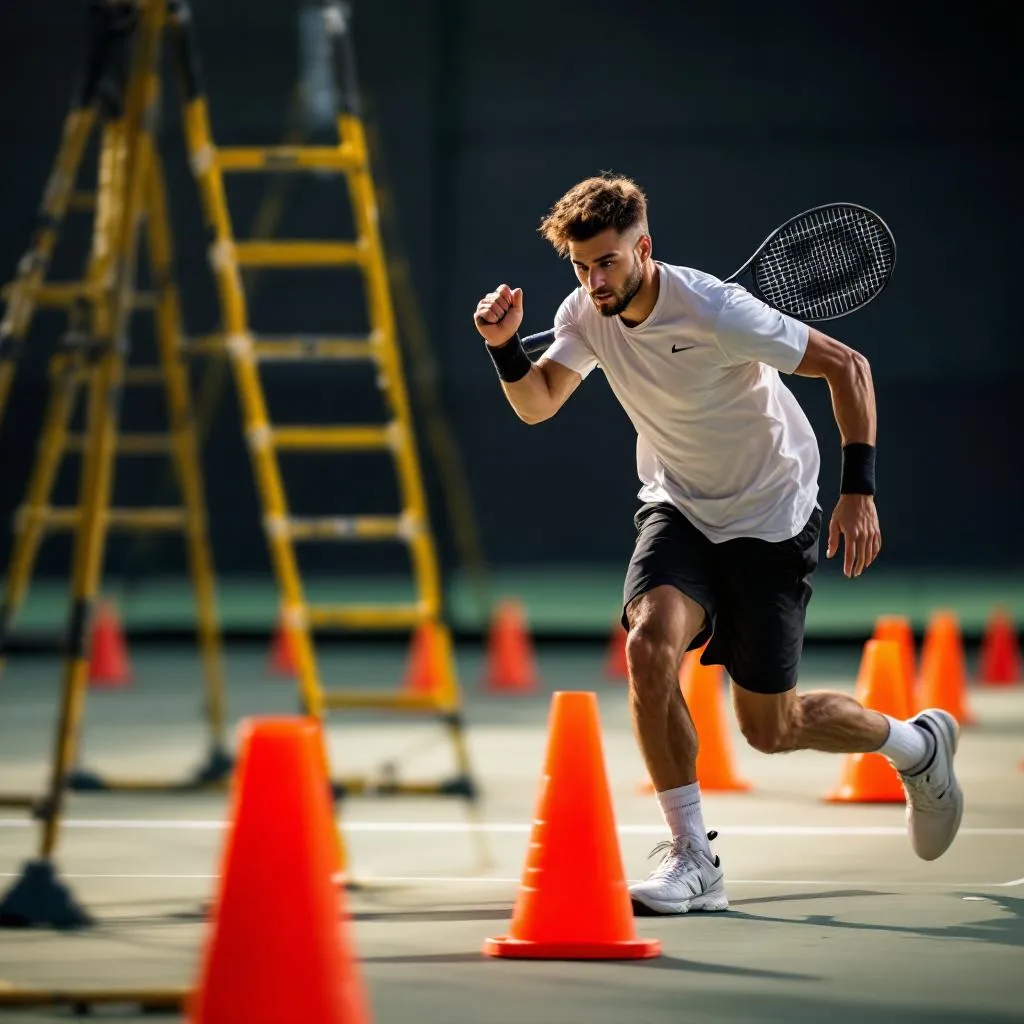
Ever stopped to wonder how the pros—those tireless forces on the court—manage to dig deep point after point, staying sharp and explosive hour after hour? It’s not luck and it sure isn’t magic. That kind of relentless intensity, that controlled athletic fire, is a product of targeted, intelligent conditioning—work that most people never see.
But here’s the real question: If you want to match that energy, or even just last five sets without your body giving out, are you actually training in a way that truly gets you there? Odds are, there’s something crucial missing from your current routine.
Let’s talk honestly about tennis fitness. Browse the internet or watch group sessions, and you’ll see footwork ladders, cones, sprints—standard drills, useful up to a point. But if you’re looking for something that actually moves the needle, you need to shift your attention. There’s a vital piece most overlook. Let’s dig into that—the kind of training designed to mirror the brutal, beautiful rhythm of real tennis: repeated, high-octane movement, again and again, until your mind starts to crack before your legs do.
Reshaping the Way Tennis Players Condition
A few years ago, our team broke the mold. We combed through every aspect of tennis-specific conditioning and found that, for sustained performance and lasting careers, there are nine critical pillars. We call them threads—they’re the backbone for every well-rounded athlete we train.
(If you’re curious about the full framework, you can look up our Nine Threads of Tennis Strength and Conditioning—but for now, let’s zero in on the one that makes real difference: Repeated Effort.)
Repeated Effort is the missing link. It’s a training approach that places you—player, warrior—into situations that closely replicate match pressure: sudden directional shifts, explosive bursts, measured bouts of effort, just-long-enough rests. The aim? Train above what you’d ever hit during actual play. That way, on match day, you’re not just surviving those savage rallies—you’re thriving.
Yes, you’ll push the body physically, but it also becomes a mental crucible. You find the edge of your limits, build resilience, and learn to trust your recovery. And honestly, nothing else toughens a tennis player the same way.
This isn’t year-round grind. We weave Repeated Effort blocks into a training season four or five times, usually for two or three weeks. The best window: six to eight weeks before tournaments where you want to peak. For young athletes, these intense sessions are a wake-up call. They’re pushed past their routine comfort zone and discover they’re capable of much more than they thought—an awakening that translates directly into match play.
Putting It Into Practice: How Repeated Effort Looks on the Court
Here’s the core of our process:
- Pick one to three tennis-specific agility drills.
- Each burst lasts 20-30 seconds. Rest for another 20-30 seconds. Seven or eight repetitions per drill.
- After each set of reps, chill for 2-3 minutes, then hit the next drill.
No two athletes are the same. Adjust durations and intensity as needed, based on age and conditioning. Total session time: about 30 minutes—including a thorough warmup, which is not optional.

The goal is intensity over polish. It’s not about flawless execution—the best work happens when technique begins to fray. That’s where real growth kicks in, both physically and mentally.
And forget about endless treadmill runs. Tennis is not linear. It’s chaos: side steps, sprints, lunges, pivots. Multi-directional drills are essential so your body learns to react and adjust under real fatigue, just like it has to when you’re a dozen rallies deep and every shot counts.
Three of our go-to drills for this:
1. The X Drill—fast, reactive, pure tennis essence.
2. Lateral Burns—face-to-face with the wall of your own endurance.
3. Forward Lateral Suicides—fast feet, burning lungs, game-like rhythm.
Seeing these in action does more than words—watch a video, if possible. Better yet, get out on court and test your limits.
Final Takeaway
If your idea of conditioning is slogging through 5km or pounding a treadmill, you’re missing the point. Trade that in for repeated effort training. Bring your preparation closer to what you’ll actually face in a match—unpredictable, explosive, brutally honest.
Give these methods a real shot. Not only will your physical game rise, but you’ll find a new edge in confidence and grit. That, in the end, is what separates those who hang in the rally from those who own it.