Let’s walk through the core ideas that can turn any average doubles team into a pair that others wish to avoid. No gimmicks—just clear, practiced strategies, smart positioning, and a handful of tactical tricks that give you and your partner a fighting chance against anyone. Take each one seriously. They all count.
1. Find Your Place.
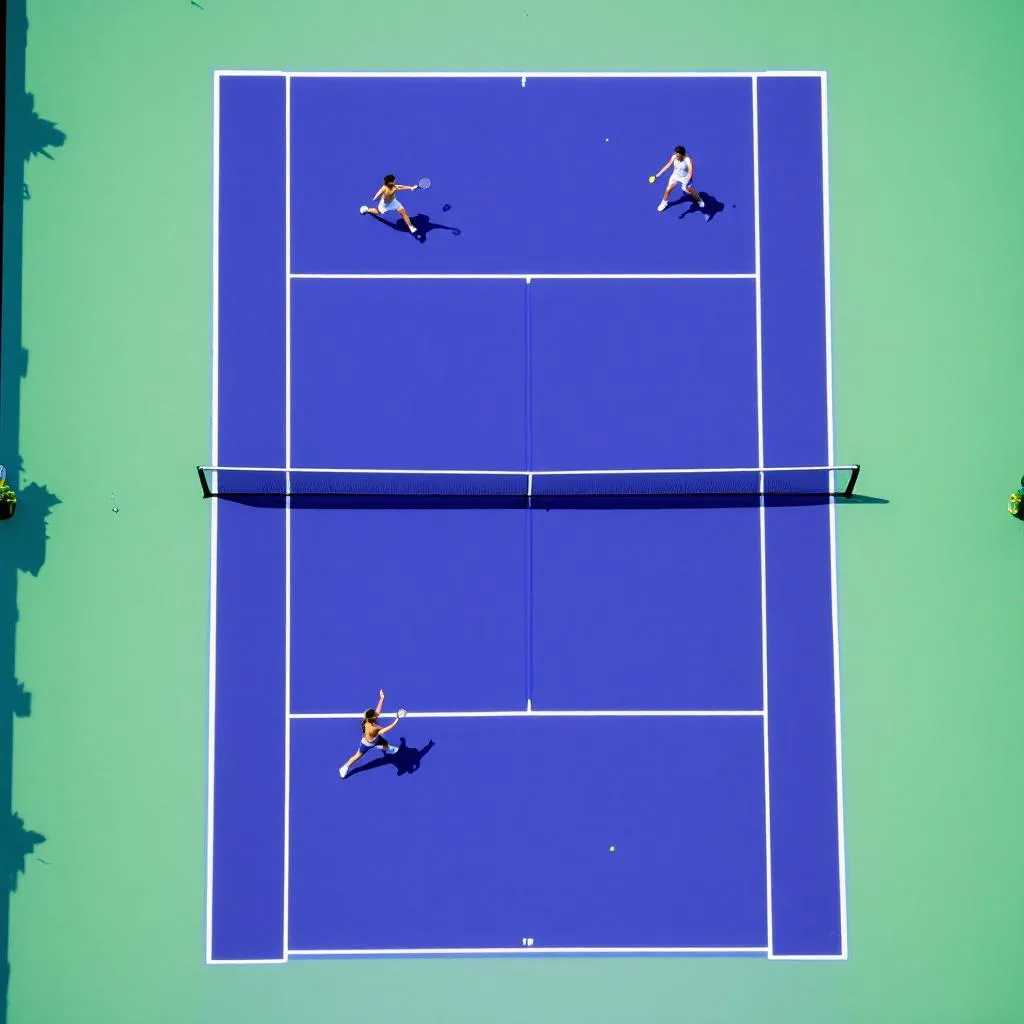
It seems basic, but the number one mistake beginners make is laziness with court positioning. Each point begins with a choice about where you stand. If you default to the singles mindset and crowd the center or hug the sideline, you’re begging for trouble—a well-placed shot will find the empty space. Instead, when serving, stay just inside the singles line. That keeps your angle options open, but you’re not giving up the corners. For the server’s partner, stand roughly in the center of your service box—imagine a giant “X” there and claim its crossing. If you’re receiving, hold your ground behind the baseline. Give yourself that extra second to react to big serves.
2. Read the Opposition.
Doubles is not just about you and your partner—it’s a chess match where every move should account for your opponents’ positions. Track them constantly. If you’re at baseline, send the ball back to the other baseline player to keep the rally going. Are you stationed at net? Your job is to finish the point, so hit to their net player. Watch how opponents shift; their movements are roadmaps to where you should send the ball next.
3. Move With Intent.
Standing still is a cardinal sin in doubles. Too often, players freeze when their partner has the ball, mentally checking out until it’s ‘their turn.’ Don’t. Think of the ball as a magnet, and let it guide your steps. If your partner pounds a shot from the baseline, drift back near the service line—it’s about coverage and anticipation. When the ball sails to the opposite baseliner, slide toward the net. That keeps you in the action and ready for those lightning-fast exchanges. If the opposition sends a return near your partner up front, poach: jump on it and aim at the mirror image opponent.
4. Stay Alert, React Quick.
Watch your partner, but focus on your opponent, especially their net player, when the ball is behind you. If your partner sends a lob or is in trouble, recognize that you might be the next target. Keep your eyes alive—your awareness buys you precious split-seconds others waste.
5. Windshield Wiper Coverage.
Picture your team as a windshield wiper sweeping the court: as the ball moves side to side, so do you. Never abandon your half. If your partner gets pulled wide, slide over and cover more of the court. This flexible movement prevents opponents from exploiting open space. Move in sync—this requires practice but pays off with rock-solid defense.
6. Use the Lob.
A good lob is chaos incarnate. It pushes opponents backward, disrupts their rhythm, and can flip a defensive position into attack mode. If you hit a high, deep lob, both you and your partner should press forward: hold the service line, form a barricade. Forces your rivals to try awkward smashes, often under pressure. If the lob is used against you, retreat fast—drop to no-man’s land or the baseline and reform your defense.
7. Poaching: Strike with Surprise.
When the time is right, leave your position and cut off a ball intended for your partner. This poaching disrupts your opponents’ expectations and can win points outright. Poach on low balls—they’re harder for rivals to redirect. Master your footwork and anticipation; don’t show your plan too soon. Gauge your opponent’s body language—often, where their body turns, the ball will follow. Years of experience sharpen this instinct.

8. Make Them Uncomfortable.
Exploit their weaknesses. Target the weaker player. Direct balls to awkward zones—make them stretch, reach, scramble. Pressure exposes cracks.
9. See the Court’s Sides.
Don’t just smash into the middle—pay attention to the wings. If you see an open angle, take it. Doubles rewards those who can see beyond the obvious.
10. Talk. And Then Talk More.
The world’s best doubles teams never stop whispering in the moments between points. A five-second huddle about serve targets, intended shots, or what’s working can be the difference. Encourage. Adjust. Doubt breeds silence; talk builds trust.
Popular Doubles Formations
- Australian Formation: For the bold. Both take one side, forcing returns down the line—demanding for all but the most skilled.
- I-Formation: Net player crouched nearly at the center, ready to pounce; the server lines up behind. Used to confuse, to mask intentions.
- Two Back: When the heat gets too much up front, both players drop back. Sacrifices net pressure for defensive solidity—just don’t linger forever.
The Net: Where Matches Are Won or Lost
To rule the net is to rule the match. Perfect your poaching and pinching: cut off angles, force mistakes. Fake moves—hint at a poach, then hold your ground. Deception is an ally.
Serve and Return Tactics
When serving, coordinate to set up your partner at net. Know your strengths and their weaknesses—target backhands, serve out wide, play percentage tennis.
On return, avoid hero shots. Keep the ball low, aim away from the net aggressor. Set up your partner for volleys.
In the end, the doubles game thrives on connection—between you and your teammate, between idea and action. Mastering these patterns won’t just make you a competent doubles player. It will make you the partner everyone wants by their side when the sun’s setting and the score’s tied. And isn’t that half the point?