Of all the shots in tennis, the return of serve sits right behind the serve itself in pure importance—yet somehow, it becomes the orphan of most players’ practice sessions. Every match is split evenly between serving and returning, but most amateurs pour their energy into groundstrokes or smacking serves, leaving the return as an afterthought at best. That’s a mistake. If you want to start rattling your opponents from the first swing, mastering the return is non-negotiable.
Let’s get into every essential aspect—positioning, movement, reaction, preparation, and the mechanics of the swing—so you can make your return not just solid, but dangerous. My name’s Randy Reynolds, certified instructor and Tennis Nation head at the Reno Tennis Center, and this is your step-by-step guide to building a return that really bites.
Take a page from Andre Agassi. His returns were legendary, not because of magic reflexes but because he practiced this shot until it was a weapon. The biggest misstep I see, even in my own game sometimes, is neglect. If you rarely train your return with intent, it will never show up for you under pressure.
Where Should You Stand?
Picture it: a tight string stretching from your opponent’s racquet to two expected targets in your half of the court—one running straight down the central T, the other reaching for the wide corner. Your ideal spot isn’t a guess—it’s dead center between those two threat lines. From there, everything else is adjustment.
Aggressive players, who want the early initiative, inch forward until they’re as close to the baseline as their reflexes allow. The trade-off? You get on the ball sooner and push the server immediately, but you sacrifice precious fractions of reaction time—especially tricky against vicious spins tugging serves away from you.
Defensive-minded baseliners—especially those comfortable on slower, spun-up clay—hang further behind, often three or four feet back. This gives you an extra split-second to react, helping you get strings on more returns and stretch the exchanges. The ideal? Start about a meter behind the line and tweak your position as the match unfolds. There’s no shame in shifting if your current stance isn’t giving results.
Getting Ready: The Mental and Physical Setup
Think balanced, twitchy, ready-to-pounce—shoulders soft, knees flexed, the weight buzzing through the balls of your feet. You’ll see pros bouncing lightly, always in motion, not just to ward off nerves but to keep their muscles alive and uncoiled. Slack arms and loose wrists are vital; tension kills racquet head speed and sabotages your timing.
As your opponent prepares to toss, lock in and let your mind track everything. The ball toss tells secrets: wide for slice, high overhead for the kick, low and out in front for the flat heater. The angle of their racquet, even the rhythm of their windup, leaks clues about direction and spin.
But here’s the subtle trick: Once the ball reaches that last four feet before impact, stop chasing it with your eyes. Fix your gaze; let your innate sense of timing take over. Why? If your head lifts or wobbles in those precious milliseconds, you’ll spray the return.
Reacting: The First Few Moments
You must steal the initiative with a subtle forward step as your opponent begins their serving action. As the racquet drops, you explode into a split step, catching yourself mid-air and landing just as the server meets the ball with their strings. Land loaded—muscles coiled for the first burst, balanced so you can spring left or right instantly.
Every server has their quirks; some glide through a long, loose motion, others snap it out in a blink—adjust your timing for the split step accordingly, but the golden rule stands: begin your final prep as the racquet is about to smack the ball.
The Mechanics: Turn, Stack, and Strike
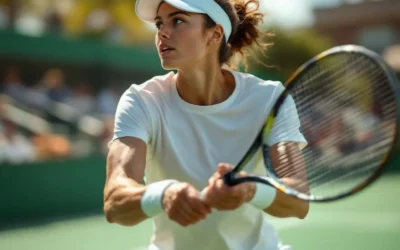
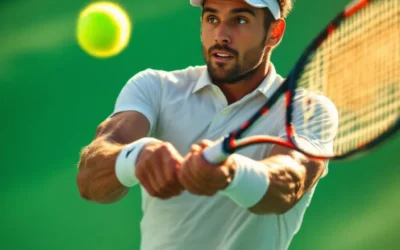
As soon as you feel the serve’s direction, rotate your hips and push with your outside foot—the left for forehand, right for backhand. Do not wind up like you would for a rally ball. The return swing is compact, efficient—think more of a controlled shove than an elegant arc. You keep your stroke short, shoulders leading, the contact well in front, your head locked on the spot until after the ball has left you.
No need for a giant flourish. Simply guide the ball deep, finishing your swing around your core, not wrapping it extravagantly like in baseline rallies.
A Small but Powerful Cue
Try letting your elbows drift just slightly away from your ribcage as you split forward—this tiny adjustment automatically reins in your backswing, keeping everything short and ready for faster serves.
Most Common Pitfalls
Returns go wild for two consistent reasons. First, the backswing is too big, borrowed from endless drill sessions on groundstrokes. Second, the hitter’s head wobbles or lifts at contact. Stick to an abbreviated motion and freeze your vision at impact—the improvement will show up quickly.
To sharpen your returns, commit to practicing them deliberately. Don’t just hope it clicks in matches. If you want to pressure your opponents from their very first serve, your return must sharpen into a blade, not stay a blunted tool.
If you’re in Reno and want to turn the return into your calling card, join me for a session at Tennis Nation—let’s build a shot your opponents will dread from the opening point.