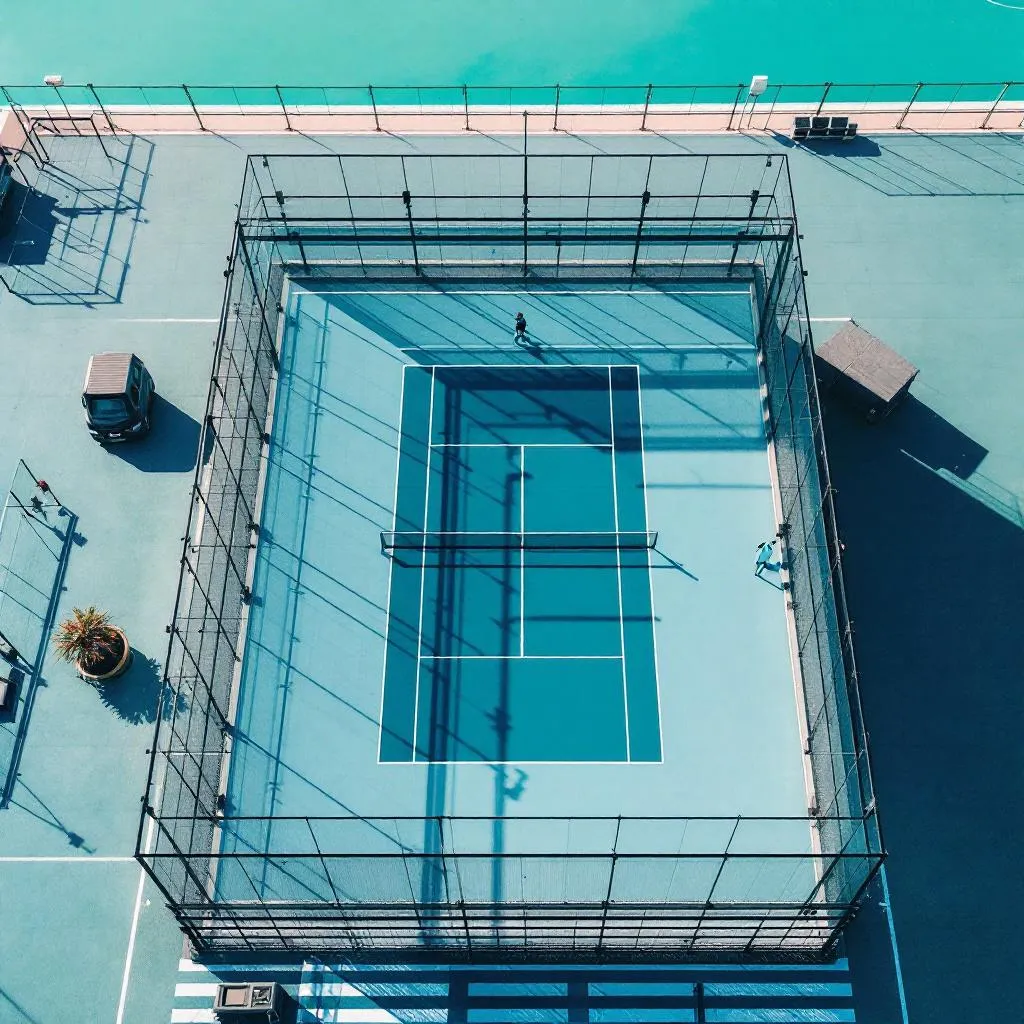
Don’t panic. You haven’t missed the initiation rite; you’re just standing at the threshold of what makes padel a game of craft, wit, and deliciously tricky tactics. These Spanish shot names aren’t ornamental—they’re at the very heart of the sport’s unique rhythm. Learning them will not only give your on-court conversations a splash of continental flair but will connect you to the deeper strategy that separates casual players from serious competitors.
Think of what follows as your hands-on field guide to the essential Spanish vocabulary of padel shots—an explorer’s map with just enough detail to get you experimenting confidently, but not so much it reads like a dusty textbook. Key shots, explained in plain English. We’ll break down what makes each special, when to employ it, how to approach it, and why it matters if your aim is to evolve beyond the beginner stage.
Let’s jump in.
Bandeja: The Defensive Anchor that Keeps You at the Net
First up, the Bandeja—a word that literally means “tray” in Spanish, hinting at the racket’s angle when you play this hallmark overhead. The Bandeja isn’t a smash built on brute strength. It’s about finesse, control, and holding your ground.
When your opponents fire a deep lob—too far back for you to crack a winning smash, but not so deep you want to surrender the net—you unfurl the Bandeja. Stand sideways, left shoulder toward the net (if you’re right-handed), racket raised as if you’re balancing a platter. Meet the ball at head height. Instead of hitting flat and hard, slice under and across, sending the ball back with low, stubborn spin. The goal? Push opponents back, keep the ball skidding low and close to the glass, and—crucially—avoid ceding your net dominance. This shot is both shield and spear, blurring the line between scrambling defense and gentle attack.
Learning the Bandeja demands patience: slicing smoothly, finding the right height and depth, resisting the urge to lash out when your real enemy is loss of control. It’s not a beginner’s minefield, but nor is it a breeze. Yet, for anyone serious about padel, the Bandeja is the passport shot—fail to learn it and you’ll find yourself fighting from the back court far too often.
Víbora: Finesse, Spice, and a Coil of Power
If the Bandeja is a defensive bulwark, the Víbora is its venomous cousin—Spanish for “viper,” and it lives up to the image. The Víbora is an attacking overhead bristling with sidespin and intent. It’s what you unleash when you’re gifted a slightly higher lob or sense vulnerability in your opponents.
Again, side-on stance, though this time your racket might wind up even higher and further behind your head, a tennis serve in miniature. Hit the ball with a snapping wrist and a bruising sidespin, working your arm across the ball as if slicing through a thick rope. The result: the ball tears away from your opponents after the bounce, hugging the glass or shooting out at a sharp, impossible angle. It’s bold, requires skill, and often hands you the rally on a silver plate—if you can master the timing and control.
The Víbora asks for more power than the Bandeja and a deeper feel for spin. It’s a shot you’ll grow into. But once you pull it off, it’s addictive—watching the ball slither away as your opponents flail is pure satisfaction.

Globo: The Artful Escape (aka The Padel Lob)
Not uniquely Spanish in concept, but possibly nowhere more important than here. The Globo (“balloon,” to the letter) is the long, floating arc launched over opponents’ heads, mainly when you’re pinned towards the back and looking for a way out. Think of it as your get-out-of-jail-free card—the tool that resets the rally, chips away at your opponents’ net monopoly, and buys you delicious seconds to reclaim court control.
Technique is simple but deceiving: keep your racket beneath the ball, stroke gently upwards, and send it high and deep toward the glass at the far end. Done well, it forces your opponent to scuttle back, turning defense into offense. But it does take practice—not too short, or you’re target practice; too long and you risk the out line or an easy smash for your rivals. The pace and height must feel just right, a touch for which you’ll develop a sense with time.
Chiquita: The Cheeky, Soft-Hands Surprise
Here’s a stroke that will charm or infuriate, depending on where you stand. Chiquita—meaning “little one”—is a delicate, low-velocity shot played from deep, just trickling over the net to land at your opponents’ shoelaces. Instead of blasting away, you draw them forward awkwardly, coaxing up a weak volley and snatching the initiative yourself.
It’s all in the disguise—show no sign until the last second; make your back-swing a whisper. Then push (not hit!) the ball so it barely clears the tape. The challenge lies in the restraint—a fraction too heavy, and it’s a sitter; too meek, and you gift them a net kill. But succeed, and you’ll outfox even the most aggressive net huggers.
Contrapared: Mastering the Glass, Owning the Rally
Unique to padel—and proof that walls are your friends, not foes—is the Contrapared (“against the wall”). When pinned so deep at the back you can’t clear the net, you deliberately bounce the ball off your own back or side glass, letting it rebound strafing across to your opponents. It’s a desperate move with beauty in the execution—and when pulled off, it earns not just applause, but precious time to regroup.
Getting the angle and weight right is half-art, half-physics homework. Overdo it, and you hand your foes a sitter. Underdo it and the rally is over. But with repetition, you’ll gain a sixth sense for how to use the glass as lifeline rather than prison.
Expanding Your Shotlist: When Spanish Really Gets Fun
As your confidence grows, you’ll absorb other shot names—Dejada for the swift drop shot; Bajada de Pared, a fierce drive after the back wall bounce; Dormilona, so quiet it “falls asleep” just over the net; Chancletazo, the sharp, slapping power finish; even the Willy, a backwards, between-the-legs flourish for the daring.
All these flourishes stem from the same truth: padel is a creative, ever-evolving sport. Every new Spanish word you master is an invitation to experiment, express, and enjoy the game on a deeper level. So start with the basics—Bandeja, Globo, Víbora, Chiquita. Then let your hands, feet, and curiosity do the rest. The language will come. The fun is already waiting. Welcome to the real world of padel.